

I am half a century old, as of about 3am this morning. When i was nine (my favourite age, although twenty two was also a good year) i told my best friend a secret, as we shared an apple behind the school water tank, where we liked to hide from the evil dinner lady Mrs Russell. (I forget her name, Russell may actually have been the name of her snot-nosed-sly-punching son, anyway a terrifying figure in pastel, who smiled whenever she was angry). I told best friend, almost certainly to please her, but also because I was reading a lot of The Worst Witch at the time, that when I was old (fifty was old to me then) i would sort of evolve into a witch. That was the secret. That I would live on a hill. And that I would have fun with my magical friends. I dreamed this dream on and off over the next thirty years or so, whenever I needed a nice thought to escape to. It was essentially a retirement plan, I see that now. And I reckon those witchy primary school ambitions have now pretty much come true (bar flying over the treetops by moonlight) because as of this year I have moved my now extensive cushion collection to live on a (slight) hill. My friends have always been magical, as they were at nine, so no change there, but I do now also have my fantastic daughters, all grown up and adding their own witchy ideas to the mix. I’m not going to say blessed but … It’s alright, having daughters. I might recommend it. They keep a witch on her toes.
My only true regrets at this my second quarterly review (well the only regrets I’m prepared to admit to) are not wearing more orange over the years (it’s my socially unacceptable favourite colour), and not telling that condescending male boss when I was 24, “Fuck you with your pseudo feminist interpolations”. In fact, to this day I have never said interpolations out loud.
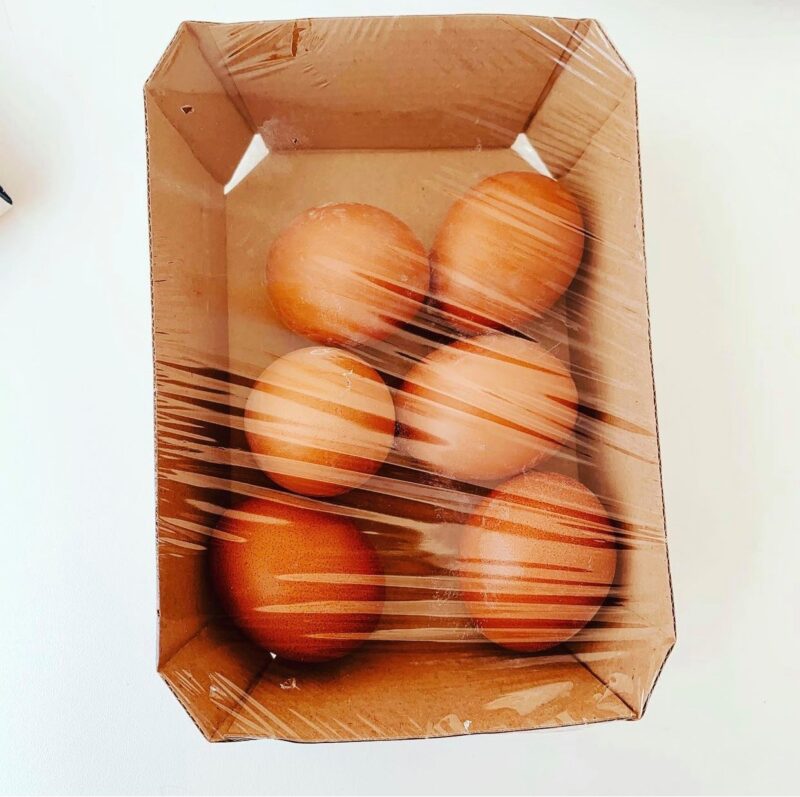
I have a bunch of deadlines, a to do list as long as my arm, so naturally I’ve just spent an hour writing a weird rap about my favourite food. I blame my friends for filling my timeline with their yummy cooking, which is making me hungry. This is pretty much just a list of food, with a brief note on why I would never eat a crow and what we will do when the chickens rise up.)
My dreams are filled with a really good boar Ragu with fresh tagliatelle, or a really beautiful piece of grass fed well reared bloody filet mignon, dripping with mustard and with garlic spinach on the side. But in reality that’s an Italian job, meaning a holiday thing, and I always feel horribly guilty because I love cows, a hangover from my country childhood, sitting reading in fields while the cows mooched lazily around me, ignoring me, except to moo half heartedly if I stood up too fast, but maybe not that guilty because my iron levels are trashily low, always have been and the once a year holiday craving for steak is debilitatingly real. I always plan not to give in but always do, dribbling. It’s monstrous. No guilt about the boars, they’d eat me if they could, as a waiter once pointed out. None of this in any way a position I plan to defend, it’s indefensible (but delicious). A more everyday loveable treat would be pickled herring, which I don’t eat often cos it ruins your breath for days but I eat two pots back to back straight away if I know I’ll be alone for a few days, if the kids are with their dad, say, and I have no meetings or any social plans, raw fish sliding off the little wooden hook, falling apart in your mouth, bloody love it, also scrambled egg and a tiny bit of really good, really thinly sliced smoked salmon (fresh lemons, pepper) to flavour it, on buttered chewy half sourdough toast. Also love home fried chicken (chickpea flour and olive oil works best for me, with a dusting of Parmesan to make the surface chewy, or possibly doused in fresh lemons and dollops of hummus, a few leaves, or chicken and chickpeas in a tomatoey pepperonatoey stew, eaten like a soup with crusty bread, which I’ve made so often that the kids have gone off it, maybe roast chicken stuffed with fresh lemons and garlic and Rosemary, cooked until it’s almost too done, with rock salt seasoned roast baby potatoes and salad and dark green pesto gravy (fresh pesto mixed with the cooked meat juices) or in winter with finely chopped Brussels sprouts fried in fresh ginger and garlic and olive oil, lots of black pepper, or a nice spinach and Parmesan omelette, sliding butterly into a twisty baguette. Maybe a good freshly made moussaka (not made by me, I hasten to add, who can be bothered stirring that stupid but delicious cheese sauce for hours) with a Greek salad and flat bread, grilled vegetables and baklava and good black coffee to wash it all down. I’ve decided I must like moussaka because it reminds me of my dad’s shepherds pie, so I should probably just hang out with him more often rather than literally sacrificing lambs. I’m obsessed with a local Italian who do a great parmigiana. Aubergines melting with cheeses and delicious tomatoeyness, with a nice crunchy curly salad and a glass of crisp cold Pinot Grigio (no idea why the Italians came to cold and rainy England, but our tummies thank them). If I have a takeaway I’ll get sushi and Edame, some gingery pak choi in soy sauce, but I’ll include those lovely battered prawns with sesame seeds which probably aren’t even authentic for all I know, who cares, they’re delicious. They’re secretly the reason for the takeaway, love a prawn. I love squid too but I’ve tried not to eat it ever since I learned how smart squid are and how hard they try to escape us, poor bastards. Just thinking about them navigating nets and traps with craft and skill, only to be turned into calamari. A pretty humiliating come down for their amazing alien brains. I eat a lot of chicken, it’s true, but in my defence I have never eaten a really clever bird, never knowingly eaten a crow for instance, I have a clear preference for stupid and/or unrelatable creatures it seems, so long as I’ve checked first that they didn’t live or die cruelly. Again, indefensible to kill things at all, even if they’re stupid. Although a chicken once pecked me really hard when I was four, so I think the chickens probably had it coming. But I won’t try to defend the frank immorality of this position either. So like every centrist I’ve now pissed off both sides, both meat eaters and vegetarians with my guilt and my killing, but perhaps one day I will be eaten by lions, so karma will come around and the vegetarians at least can take comfort in that. It wouldn’t be the worst way to go and I would hope that the lions would enjoy the meal and not find me too stringy or dry. Anyway. These are my favourite foods mind. To be clear, I can go veggie for days on end if haloumi, grilled veg, avocado and delicious salads are involved, especially in summer. And porridge. I love porridge. Maple syrup and soft bananas. So good. Yum. I’m not averse to a biscuit. Custard creams mostly. But I only tend to want them when I’m sleep deprived, and eating my feelings, with lots of English breakfast tea to keep me awake. Really fresh nectarines. Nothing better than biting into a fresh plump in season nectarine which explodes ripely straight down your sleeve and chin, oh Lord. I look at this list and think how lucky I am to eat so well. I always have, somehow even when I was broke, although in those days there were more vegetables from the market, and no meat, just a lot of eggs and tinned fish. I was also considerably slimmer, so maybe I’ve just gone downhill, nutrition wise. But genuine food poverty, of the kind I’ve never known, kids going to sleep hungry and malnourished, anaemia from their poor diets, is one of the worst things going on in our country right now, maybe THE worst thing, and utterly indefensible in a thriving first world economy like ours where we all post our lunch at the drop of our hat. I understand my luck, my pure undeserved luck, and my children’s, that we get to eat this way. That we get to have all this good nutrition (except for the custard creams of sadness, obviously). My grown up daughters already understand that food is so much more than fuel and they cook for their friends and partners already, really delicious and nourishing meals, which pleases me immensely. Food is love and you just can’t have too much love. Or too much nourishment. A vegetarian reading this will see only a catalogue of small deaths and a serial murderer, not exactly love. I have no excuses. When the chickens rise up, as they must, I’ll be first against the wall. Although my preference would be the lions, I’d be wasted on chickens.

Photographer: Angela Feely.
Charlotte Levin has been shortlisted for the Andrea Badenoch Award, part of the Northern Writers’ Awards, and for the Myslexia Short Story Competition. Charlotte lives in Manchester and ‘If I Can’t Have You’ is her debut novel, published by Pan Macmillan in July.
JO
From page one, the book is a kind of assault on the senses as you start at the end of the story and we’re plunged deeply into Constance’s traumatic world. As the novel progresses, we begin to understand that only people at arm’s length feel truly safe for Constance, even though this seems to set her up for loneliness. Constance is starved of real human connection and yet she picks someone to attach to who will always be just out of reach. In this way, you construct this perfect push-pull, between the two main characters, dropping us right in the middle of a suspense filled drama of attachment. I think the way you render Constance, the aspect of genuine tragedy in her inner conflict really comes over. I wondered where you got your influences for Constance?
CHARLOTTE
For the story to work, it was important that Constance felt separate from the world and had difficulty forming healthy connections. Her relationship with her mother was, although loving, fairly co-dependent and, along with events surrounding her father, she was likely to develop attachment and abandonment issues. I am incredibly interested in psychology and have read lots about attachment styles. People with anxious attachment styles are scared of abandonment but often subconsciously go for someone avoidant or even narcissistic who will, in turn, likely abandon them. The avoidant person is also only that way due to fear of abandonment themselves. So, you get the push/pull thing you mentioned. I never wanted to write a plot-driven thriller about a stalker. I always wanted it to be her realistic unravelling, with backstories, combinations of people and events that would create the perfect synergy for that to happen. As you’ve said, wanting to be with someone who is just out of reach, is a common issue. I’ve made this mistake myself. Repeatedly! So, although Constance is extreme, and does some morally dubious (and sometimes illegal) things, I wanted the reader to still relate to her on some level.
JO
Absolutely! There are red flags early on with Samuel, Constance’s love interest, and you make these available to the reader but you don’t clue Constance in, which again really adds to the suspense and sense of danger. The narcissistic, gaslighting Samuel tries, early on, to get her to wear clothes his ex girlfriend has left behind (they may as well be his mother’s). And I thought this was a really clever way to build suspense. As much as this is a novel about grief and loss, and all the ways in which attachment can go wrong, it’s also very much about the inner scripts we have as we head into romantic relationships, isn’t it?
CHARLOTTE
It is, yes. Though, interesting that you say I don’t clue Constance in, because I think we can ignore red flags so well when compelled to enter into relationships, that we’re only unaware of them on a conscious level. Constance decided that Samuel was the one person who could give her the happiness and love that she craved without much evidence to support that, only that she wanted it to be true.
JO
I wanted to talk to you a little more in depth about the male protagonist, Samuel, because he’s a really fascinatingly drawn character. And to your immense credit, even though his behaviour is terrible, narcissistic, grandiose and gaslighting, only superficially charming, and we very often want to rugby tackle Constance to the ground and set Samuel on fire, and yet he is not a one dimensional villain. You really show us, with these small but growing psychological revelations as the novel progresses, how he became the way he is. Can you say what your influences were when you were creating Samuel? And have you had any strong reactions to him from your early readers?
CHARLOTTE
Haha, I love that! I’d read certain Samuel scenes back and swear furiously at the screen! The book wouldn’t have worked if he’d been some moustache-twirling villain. I wanted him to be oblivious as to how awful he was. To be so entitled, so narcissistic that it often doesn’t dawn on him that his words and actions might actually hurt and affect others. His only motivation is to get what he wants and to do what he wants, rather than hurting people. Aside the times he does want to hurt and gaslight. And within all that, he still considers himself a nice guy. Samuel is an amalgamation of people I’ve encountered in my life. Unfortunately! And as with those people, he has reasons for being the way he is. I kept in mind that he’d stopped developing, emotionally, when he was a teen. He too is unable to form healthy loving relationships, pushing them away through his own issues. I needed that dynamic to create the story. To blur the lines as to who the villain is. And, yes, lots of readers seem to have the same reactions towards him that you had! Thank goodness!
JO
I think it would be quite difficult to talk about your novel without talking about class. And I am using the word in its strict sociological sense, to describe, in a neutral way, a division between people, stripped of any pejorative associations the word also has. And I felt the need to define what I meant there, because I think that although we can talk about gender and, increasingly, race and ethnicity in Britain, class still seems to be the big taboo. And yet class infiltrates every aspect, it seems to me, of Constance and Samuel’s intimate relationship. Samuel’s relative privilege really informs his views about, and ultimately treatment of, her. His relative social power affects the interpersonal dynamics between them (she’s often left feeling humiliated by micro aggressions he affects to be unaware of). And his relative privilege seems to be an aspect of his entitlement and narcissism generally. Class is certainly one of the ways in which he hurts her. Were you thinking about this issue when you were creating him, or would this have been the same novel if Samuel hadn’t been, in effect, Constance’s boss?
CHARLOTTE
Oh, yes. I kept this in mind at all times. I think it essential to the story. I set it in a private medical practice to instantly create that dynamic. He is privileged but being a doctor also ‘respectable’. One of the reasons he doesn’t consider her girlfriend material is because of her background and his being her boss means he has control over her and the situation, which he abuses. But at the same time, Constance is continually aware of the class difference, and she flits between shame and bitterness when acknowledging the privilege that surrounds her, which also affects her behaviour and actions.
JO
I’m going to ask you a question which I love asking writers, because their answers are so individual, and so enlightening. How do you get into a creative head space for your writing? Do you have any special rituals or routines, and what does the act of writing do for you?
CHARLOTTE
I look at other writers on Instagram and Twitter, with their lovely workspaces with freshly cut flowers and rituals, and in comparison, I’m just a mess. Despite having an office and a dining table I could work on, I prefer to write on/in my bed. If I try and sit at my desk, I feel a bit of an idiot and can’t write. I need it to be more relaxed than that, especially doing first drafts. I’m not good with a blank page, I can struggle to get words down. But when I’m editing, I go to the other extreme and become quite obsessive. Though I’m going to try and not do that with my next book because I’m not sure it’s healthy!
Writing is such a weird thing for me because I both love it and hate it. I sometimes wonder why I have a compulsion to do it as it can be so hard, then other times, it’s a massive buzz. I think of it as my drug of choice. And finishing If I Can’t Have You was such an amazing feeling. I still keep looking at my proof copy and thinking, ‘I can’t believe I wrote that.’
JO
Who would you say are your own writing influences? I thought I spotted Joyce Carol Oates in your very strong use of suspense, in the psychological insights, the touch of southern gothic and the great twist at the end of the novel. You play with ‘Wuthering Heights’ in several wry asides. There was also a smidge of Jean Rhys’ ‘Wide Sargasso Sea’, I suspected, and of course I’m thinking of the scene where the madwoman in the attic stalks down the corridor, setting all the curtains deliciously alight. Who do you like to read when you’re writing?
CHARLOTTE
I’m honoured you’d even make a connection with those writers! I refer to Wuthering Heights in the book because, although completely different from my novel, they’re both stories of unhealthy obsessional love. Wuthering Heights is also a favourite of mine.
But as far as influences go, to be honest, I am not sure there are any authors. At least not consciously. There are many that I, of course, hugely admire and have learnt so much from reading, but If anything, I think I was influenced more by playwrights. Unlike most authors, I didn’t get into reading novels until I was an adult. Before that, I was very into acting and obsessed with reading plays. Particularly, drawn to playwrights who used a mixture of sadness and humour, such as Jim Cartwright, Alan Bennett and Mike Leigh and many others also for different reasons. I wanted to write plays initially. I did write one. Though, I’m not sure how good it was!
As far as reading goes now, I read all sorts although I steer more towards literary fiction. But I also enjoy a good thriller. In terms of what I like to read when writing – during the early drafts, I consumed loads of novels. I found it helpful to trigger ideas and get my creative juices going. But once I was fully engrossed in edits, I found reading quite difficult. I needed to stay focused on the story I was writing.
JO
Can you say yet what you’re working on next?
CHARLOTTE
I can, but I haven’t worked out a pitch yet that doesn’t give it all away, so I won’t! But I will say that it’s not as much of a thriller as If I Can’t Have You, but it is similar in terms of good people doing bad things. It’s very early days, but I’m looking forward to delving into a new project and creating a new character which I hope I grow to love as much as Constance.
JO
Thank you so much Charlotte Levin! ‘If I Can’t Have You’, Charlotte’s critically acclaimed debut novel, is published by PanMacmillan in July.
If I Can’t Have You
Amazon – https://www.amazon.co.uk/dp/1529032393/ref=cm_sw_r_cp_api_i_DMy.EbNB8KQ8C
Waterstones – https://www.waterstones.com/book/if-i-cant-have-you/charlotte-levin/9781529032390
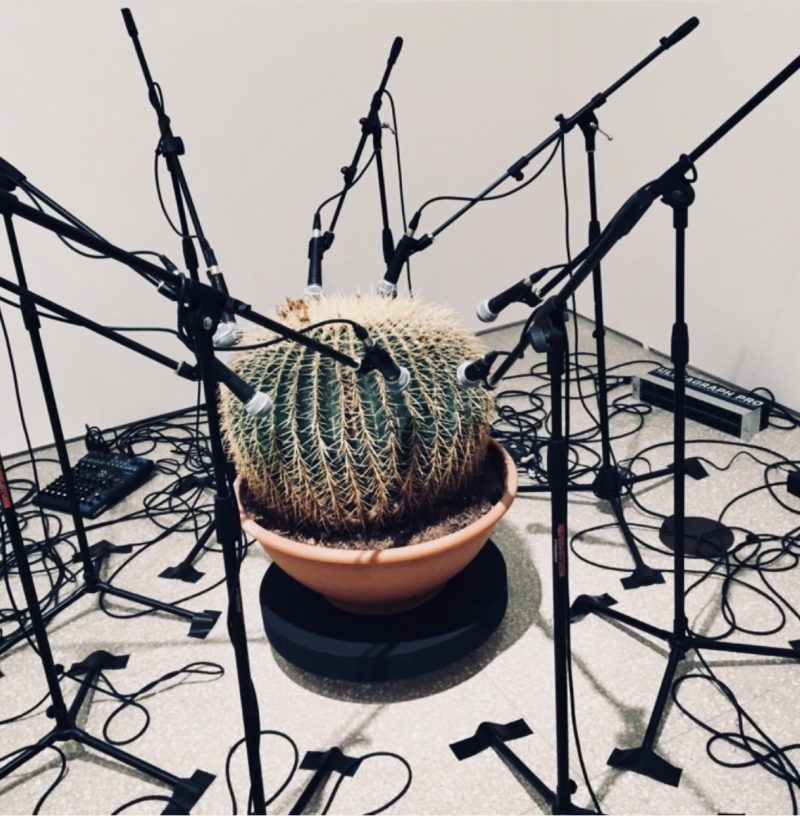
The talking cactus at the RA
I’ve written you an emotional support checklist. Because Boris. Don’t shoot.
Okay, this’ll be quick and then I’ll shut up for good. But Boris Johnson is prime minister and we’re having a Brexshit. I have mild sunburn, my boyfriend’s cat just died and as I care about my friends and have been reminded recently of all of our mortalities, I’ve written you an emotional support checklist.
Oh god, you may think, but bear with me.
This checklist is to help you diagnose all your arguments with friends, family and colleagues between now and the next general election.
Which you will. The arguments I mean.
Even if you really don’t mean to.
It will just happen, like when you catch the toe of your shoe between paving stones, stumble a bit then look behind you, hoping nobody saw.
I am here for you.
I have A List.
Nothing on it will be a surprise to you or an original point, this is merely a handy summary or checklist to use going forward, should you find yourself in the middle of an *heated debate*.
An simple tool with which you can ‘diagnose’ the argument you are currently having from 1 through to 7.
1. Black and white thinking.
Deliberately misunderstanding another person’s view point, replacing it with a different and far more extreme view. And then arguing with their imaginary viewpoint instead.
Which is a bit easier, let’s face it.
Really tempting.
2. Whataboutism.
There is always going to be some far worse issue or person one should be attending to than the mistakes or wrongdoing of the person or issue currently on the table. If somebody is doing something even worse somewhere else then you’re meeting the diagnostic criteria for argument style 2.
3. ‘Media lies’.
Any evidence presented which does not support one’s hypothesis will be designated “media lies”. Only if it fits our/their/your/my wild theories will it be deemed unvarnished manly truth or a ‘special’ insight.
4. Getting personal
The personal insult. And on Twitter, and even on FB, the PI might come right out of the gate.
But I think it’s a useful trope, in some ways so Do slyly insinuate hidden personal agendas on the part of your opponents.This is a thing called naked psychological projection, so you putting your insults out there in the public domain will definitely save your personal therapist time and direct everybody else in how best to support you going forward. I advise this one.
5. Inside info.
While arguing, always suggest that you have inside information, unique personal insights, by way of irrefutable anecdotes (because only you were there) or else that you are in some way in touch with hidden truths, vis ‘the voice of the common man’. (Boris does this a lot. Although I honestly don’t know how many common men Boris can possibly meet on his carefully managed trips out and about. A few public schoolboys and the odd old lady dazed with sunburn, possibly.)
6. The Badness
‘Anyone who doesn’t agree with all my ideas about who we are, where we need to go or how we need to get there is a bad person. And *probably* supports [insert extremist event or idea].’
Oh, we see you baby.
We do.
Just stop it.
7. What ‘the people’ want.
I don’t know exactly who ‘the people’ are, I mean I’m fairly certain I’m people but how to really tell? But argument style seven is when you align yourself with a bunch of imaginary others as you speak. So that it’s not just you spouting off in a corner, you are in fact multitudinous. An interpreter, if you like, for ‘the people’, much in the same way that the pope is for God, and with a similar level of evidence required for your assertions. Because who needs evidence when there is an imaginary crowd behind you nodding vigorously at everything you say. And you are then perfectly positioned because anyone who presents evidence to the contrary is defying the will of … ‘the people’. That would make you an elitist. A silencer. And no-one wants to be that guy, except that … think about it, Five year olds argue like this. ‘My friends said … Everyone thinks it’s my ball.’
And so do mildly dementing old men in tweed jackets, ‘Well everyone at my club thinks it’s perfectly dreadful …’
The non evidence based ‘the people’ trope is just another version of this.
Anyway, persons beating hard users of argument style seven down with evidence will henceforth be committing the crime of cleverness and therefore will be designated ‘arrogant liberal elitists’ against whom ‘the people’ will somehow riot or cry out in some hazy future rioting scenario. But in the meantime they’ll express their dissatisfaction at ‘liberal elitism’ by putting children in cages. Stuff like that.
Except that they won’t.
Except that they didn’t.
Because these ‘the people’ simply don’t exist.
The ‘the people’ who wanted concentration camps and infants ripped out of their mothers arms in a bid to see their guy ‘get tough on immigration’ are entirely cooked up in the imagination of one man.
These ‘the people’ don’t exist. He has supporters, sure. And did his supporters enable him? Yes. Are they complicit in his abuses? Of course. But I doubt that more than approximately nobody among them actively wanted him to do what he then went and did. So the imaginary ‘the people’ on whose behalf he is acting all over are cover. That’s all. An convenient trope for an already privileged man to get even more of what he wants in order to serve his own group. If racism polls well then the argument style seven guy, in this instance Trump, will use it, but he doesn’t care either way. It’s just a rhetorical device. And argument style seven guy really doesn’t have any idea either about the disenfranchised group of poor whites whose voices he’s claiming as his own, and nor does he care anything about them. That’s clear.
The ‘the people’ trope is the most dangerous argument style in current use and it’s being used not only to make a claim on an already disenfranchised group’s voice for all sorts of activities which there is no real evidence that they have sanctioned. And in order to mock an evidence based approach which would help the same group. It’s also providing an awful lot of self righteous cover for a bunch of seriously sketchy shit to go on and all whilst claiming some sort of moral high ground against Liberals.
It’s an extremely successful stratagem, it’s profoundly dangerous and it is absolutely working. Argument style seven is basically gaslighting on a grand scale.
I don’t know what we do about it but we definitely should no longer be cowed or wrongfooted by the ‘the people’ trope. Nobody should any longer get to stroll around doing whatever takes their fancy under cover of the claim they speak for ‘the people’ without strong evidence that they in fact do so.
Argument style seven needs to die in a cage.
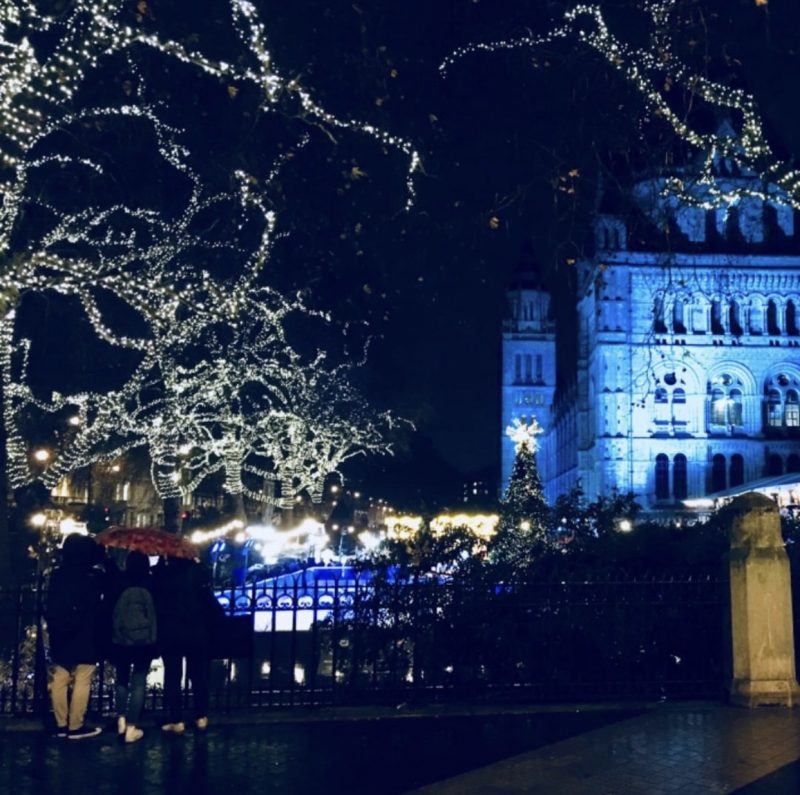
Caption: Throwing out time at the museum
So I’m standing outside the V&A just now on a rain swept street. There’s a carousel. Some Christmasishly lit trees, a singer on the corner doing carols, blah blah, all that. Very festive. Also a bunch of extremely middle class parents, exiting one of the museums to my right. But then something happened. You know that noise that an older baby makes when they discover two things at virtually the same time, firstly the joy of holding a balloon and, secondly that balloons fly away and never come back once you’ve let go? I mean Never ever.
And for fully a minute, as I stuff my files into my bag, the poor kid is just having this spasm of what is, for her, clearly absolute bloody grief over the flyaway balloon.
The crying gets worse instead of better as it becomes clearer and clearer to the obviously quite intelligent infant that the balloon is in fact getting farther away and not nearer, and as her suspicion increases that it’s really almost definitely not actually going to come back at all. That it is increasingly an ex balloon.
So whilst, yes, this is strictly in the realm of middle class problems the kid is having right now, nevertheless I think we can agree that her feelings in the moment are all very understandable, right? Normal even.
But then, here’s the thing. The parents, the friends, the aunts and uncles, the whoever, were doing that weird and I think uniquely British thing of laughing at the child’s suffering. In that ho ho ho faux-jolly ‘yes, look isn’t it wonderful. Let’s all wave goodbye to the sodding ex balloon. And Look how we are learning things, darling, as it drifts on the breeze. We are learning Science, and the ephemerality of balloons, and something something about the acceptance of loss, and all this is just so jolly good for us, kiddo, purifying even and then in a minute they skip right to ‘Stop crying, Silly. Have a bun.’
And, who knows, maybe they’re right to approach it that way, I mean what do I know?
But then the kid just caught my eye. She stopped crying for a split second. And for just a moment I thought I could see, looking deeply into those big wet eyes, that the infant had indeed learned an very important lesson today and via the balloon.
Which is that adults totally suck and it’s only gonna get worse.
I feel like this may all have something to do with Brexit but I’m not too sure.

JO:
Mickey, the chief protagonist of your novel, seems hemmed in on every side by The Troubles and the necessity of staying out of No Mans Land or finding himself in the wrong place at the wrong time with the wrong accent or school uniform. Being called Mickey instead of Ian on the protestant side of town. But on the catholic side, he has to stay off the radar of the local IRA hard men. For instance, for those who haven’t read the book, and without, I think, too much of a spoiler, at one point young Mickey falls out with another kid in the usual playground sort of scuffle. Chillingly, the other child tells on him to her IRA connected Ma.
My question is, how important was it, growing up, not to hack off your neighbours. And did that create a pressure on relationships? Was there power play between those who were well connected with the IRA and those who were not? And how does that square with everybody keeping their doors open constantly?
PAUL:
To be honest, there was a lot of friendliness, support and generosity in the area. From what I gather, working class areas are like that throughout the UK and Ireland – or were back then, anyway. It’s known that poor people are the most generous in society – giving the most to charity, for example, which is a beautiful irony.
I was once ‘called in’ as a ten year old over something I’d said to another kid who told their mum. I was warned
I try to track a change in the area in the timespan of the novel with the ‘open door’ policy of Ardoyne. It all began to change with new mini-estates being added on, bringing people from outside the area, causing front doors to be closed instead of always open.
It definitely was the case that children used their parents or family members involvement with paramilitaries to threaten you. Of course, coming from a family who weren’t ‘involved’ would put you in a difficult situation as it was the ultimate throw down in an argument. Almost always, though, this was bluster and childish stuff, as in – ‘My Da is in the RA and will get your Da killed!’, was really just a version of ‘My Da’s a boxer and he’ll beat your Da,’ stuff. I was once ‘called in’ as a ten year old over something I’d said to another kid who told their mum. I was warned, like the posters in the novel, that ‘Loose Talk Costs Lives’. I took that incident as my inspiration, fictionalized the content, upped the tension and stressed the repercussions. I think we writers do that a lot with our lives.
JO:
That’s really great news about the sense of community, and the generosity. And on a related note, possibly, there is a lot of dark, sparky humour in the Belfast you depict. I’m thinking particularly of the banter between Mickey and his beloved Ma. The dialect itself seems rich in wry and poetic insults. How important is humour in the world you grew up in, and what was it used for?
Impoverished communities often have a dark humour that exclusion, want, making the best of it, and ‘don’t let the bastards get you down’, brings.
PAUL:
Again, I think it’s related to being working class. Impoverished communities often have a dark humour that exclusion, want, making the best of it, and ‘don’t let the bastards get you down’, brings. Those without agency become experts at mockery – those in power don’t seem intimidating when you’re sniggering at them, cutting those big figures down to size.
Humour was a weapon back then and also a shield. You were hardened by having mental strips torn off you from a young age. In ‘The Good Son’ Mickey’s mum is trying to toughen him up for the streets and provide him with some weapons (in the absence of physical prowess or brutality, he needed it more than most). Teaching him to be good at cruel jibes gives him a weapon to fight with others (and he’s smart enough to be the best at it) and by using them on him, getting him used to it, leathers his thin skin, providing a shield. They’re sparring.
Humour was a weapon back then and also a shield.
JO:
I think a lot of British people have a sense or a belief that the Catholic-Protestant divide in Ireland is chiefly an ideological or tribal divide. To be honest we’re quite uncomprehending about it. But you make it clear in the novel, in a hundred small ways, that the area was in fact a geographical, social and economic trap. And that if people supported sectarian violence then in many cases it was because they’d been cornered into doing so, or manipulated in one way or another. That these kinds of decisions and allegiances are the pragmatic ethics of survival. How do you spring people from a trap like this? And until you do, what hope is there?
PAUL:
Jesus, if I knew that lol. The community is not the same as it was during The Troubles and there have been major advances – equality in voting, the ability to work and access to housing (all denied to the Catholic community during the Troubles) and that has changed the tensions a huge amount. Not to mention the peace process and decades of relative harmony.
To a large extent the day to day trauma of The Troubles was endured by the poor of both communities – as Mickey says in the novel, when he first visits a posh area, something like ‘rich people don’t have The Troubles, as well as having everything else, it’s just not fair!’. I think in the years since, the poorer communities of Belfast have learned how much they had in common at that time and it has brought some to see they were manipulated by forces using, at times, their poverty and their religious beliefs to keep them apart.
JO:
Paul, you’ve spoken out about the fact that children and adolescents are dying in Belfast and not from sectarian violence, the youth suicide rates are well above average for the region. And in your novel you write about a group of youngsters who are glue sniffing. A quick internet trawl would suggest addiction levels in the area are also on a spike, which shouldn’t really surprise anybody. What is the role of the writer here? For instance, do you see it as the role of the writer to use story to communicate the issues involved to the outside world? To help young people find the words to fit their experience? And if so, can you tell us a bit about this? Has it been possible for you to have this conversation with other writers? This is about five different questions, sorry.
I think in the years since, the poorer communities of Belfast have learned how much they had in common at that time
PAUL:
Personally, I found it shocking when I returned to live in Belfast to find out that the teenage suicide rates were the highest in Europe, prescription drug abuse was at epidemic levels, in some areas of Belfast 50% of the population were on disability benefits and the paramilitary punishments and extortion still going on – nearly always, in poor areas only. During The Troubles so little of what was going on in Northern Ireland appeared on the news down South or in the UK. I spoke to a reporter who used to take what they’d filmed and motorbike it down South to try to get it on the news down there (which we wouldn’t see up North nor would people in the UK). The invisibility and lack of reporting on the North continues which is part of the reason, I believe, that terrible things still go on here including the denying women and minorities like the LGBTQ community their rights and equality.
I was frustrated when I moved back home, asking,‘where are the writers talking about this?’ My theory is we all have gifts, and we have a responsibility to use that gift, share that good fortune, for the benefit of our fellow humans, especially for those who lack the thing we excel at. If the young people of Northern Ireland are so frustrated, so desperate, unable to express what it is that ails them, that they are compelled to take their own lives then who best to help them find those words? Who best to give a voice to the voiceless? Who better than a writer?
I said this in a pub about a year ago and two tables of writers disagreed with me, bar two of my generation, saying that their only duty was to their art. They said they saw no link between The Troubles and what was going on now. I couldn’t believe what I was hearing. They more or less got up and walked out. They said I was angry and of another generation. They were right. I’m glad I am.
In the end, I realised though, every writer must chose their own path. And who am I to tell them otherwise.
The invisibility and lack of reporting on the North continues which is part of the reason, I believe, that terrible things still go on here
JO:
Well I agree with you in that, if they’re really not feeling it, and they don’t care, then there’s absolutely no point in them writing about it. Their lack of interest will come across to the reader and no one will be listening anyway.
PAUL:
Reading Wendy Erskine’s brilliant recent collection made me feel there was another writer who was tackling the stories I wanted to read about Belfast – we’re of a similar age, so maybe it is a generational thing.
JO:
Paul, would you consider turning The Good Son into a screenplay to make it more accessible to the kids who don’t read books and to find a wider audience generally? The book definitely lends itself to that kind of treatment, doesn’t it? It shouldn’t surprise us that with your writing background much of the novel is dialogue.
PAUL:
I wish. Firstly, I’ve never written a screenplay (not the same as a play) and would have to spend a some time learning the craft, when I want to write other things too. Also, it took years to get out of plays and into prose, so it would feel like going back. And it’s very, very hard to get a film made – a historical film, even harder. We were made some offers but my agent and I weren’t convinced at the time so we didn’t go for it.
JO:
I was just thinking about Mickey, and how a smart thoughtful kid in a rundown school, a tough community, has to be quite careful outing himself as a poet. And then I remembered how Kundera said that the house of your childhood still exists just as it always was, it’s just that the way home, the road back is gone. Is it ever possible to return to your roots, and what does it mean to you to go home now?
PAUL:
I’m home; it feels like that. I’m very happy (for the most part) to be back and living with my family, discovering parts of the city and countryside I wasn’t able to visit back in the day, when going there would have been dangerous. They say all Irish people end up coming home and it’s certainly true of all of my family. I said I’d never come back here but really, in the end, I’m just a cliché. I think as you get older, life becomes so simple – be near the people you love and who love you.
They said I was angry and of another generation. They were right. I’m glad I am.
JO:
You are that rare thing, Paul, a male writer who writes strong nuanced female characters. Who inspired your women and girls?
PAUL:
Try growing up with a Ma who would take on the Brits and the IRA too if she had to, and all the while bringing up seven kids single-handedly and holding down two jobs. Never met anyone I admired more. I had five sisters I adored, who also helped bring me up and were my best friends.
Maybe the key for a male writer to write ‘strong, nuanced female characters’ is to love women; to have the utmost admiration and respect for them, as well as, an understanding of your debt to their strength.
JO:
How much of you is there in Mickey Donnelly, Paul?
PAUL:
Mickey is braver, funnier, smarter and more resilient than me. In the early short story and attempts at the novel he was more similar to me. But the more I wrote, the more I edited and rewrote, the less and less Mickey was me and the more he was his own person. Certainly, there is nothing he does that isn’t emotionally true, but the things he does and what happens to him are mostly fictional.
JO:
Can you tell us what you are working on right now, Paul?
PAUL:
I’m putting the finishing touches to a collection of short stories which will being going out to market. I’m writing a commission for Sky Arts 50 for television to be in by November (you haven’t seen me on here). I’m also working with the Jaipur Literature Festival in India on an international short story strand. And, hopefully, I’m going to start another novel. Yikes!
JO:
Well that’s something for the rest of us to really look forward to!
Thanks so much Paul!
Website: paulmcveighwriter.com/
The Good Son: Winner of The Polari Prize
‘A work of genius from a splendid writer’ Pulitzer Prize-winner Robert Olen Butler
https://www.amazon.co.uk/gp/customer-reviews/RCQASE9G3J5ZP?ref=pf_vv_at_pdctrvw_srp
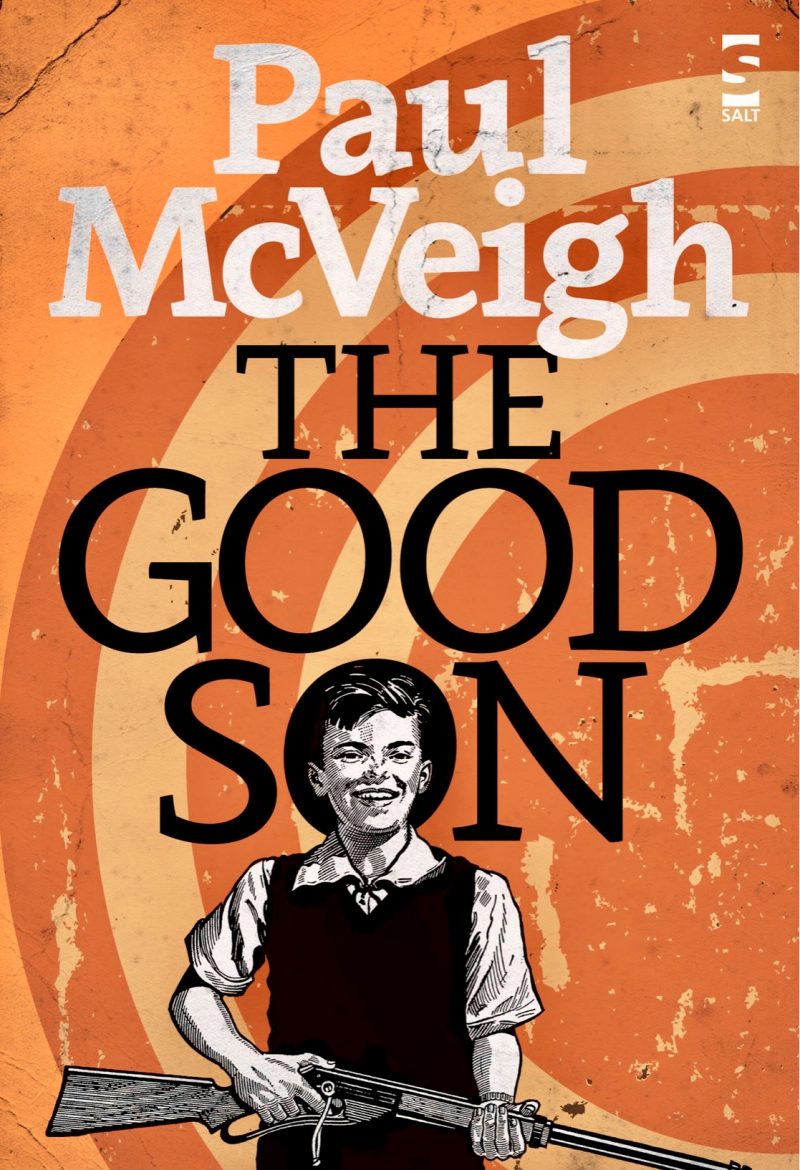
Young Mickey Donnelly is growing up in a trap. Hemmed in by the No Mans Land between Belfast’s catholic and Protestant communities, in the shadow of the Shankill butchers, he’s learning how to navigate his way though a morally complex world which is macho and anti intellectual to say the least.
The Good Son is a unique insight into a time and place like no other, Northern Ireland during The Troubles, through the eyes of a smart, artsy, principled and not particularly streetwise kid. But Mickey has his rich imagination to save him. That and the filims, which give him a window into a world outside the terrifying grey trap into which he was born. Young Mickey plots to save his family and become a filim star in America, all the while with a deep understanding that not everyone in his story will get out alive.
McVeigh could have written this novel as a tragedy or a misery memoir, instead he chooses comedy. But in this writer’s capable hands Mickey’s hilarious one liners and rich flights of fancy do not mask or distract us from the tragedy at the heart of his story, rather they reveal it. In some ways this entire novel is an exercise in bathos.
For me The Good Son has been enlightening. If I ever believed that Northern Ireland’s troubles were due to entrenched ideological differences, or a kind of wilful nationalistic self abuse, I do not now. The Belfast McVeigh renders, through the eyes of a child, is a Kafkaesque system. One in which individuals are trapped, against their wishes, their beliefs and very often their values, into a thousand daily decisions. This is not ideology at work, for many families, but the pragmatics of survival. Every politician ought to be made to read this book.
The novel’s other revelation for me has been the richness and humour in the local dialect. Cleverly and poetically woven by McVeigh into the main narrative. As I turned the last page of The Good Son I found my own vocabulary had been somewhat expanded: I’ve never felt scundered so much in my life, or told so many people, affectionately, that they’re a wee shite.
A must read.
https://www.amazon.co.uk/gp/customer-reviews/RCQASE9G3J5ZP?ref=pf_vv_at_pdctrvw_srp

‘The Ice Migration’, by Jacqueline Crooks, published by Peepal Tree Press, June 2018
Crooks’ collection of short stories is an exploration of the psychology of immigration and of migrant experiences, from the bittersweet pain of the older Windrush generation straddling two worlds while never quite belonging to either, to the frustration of lives not lived to their fullest potential. The stories are linked by one Jamaican family of both Indian and African extraction.
Crooks’ stories span from 1908 to 2013, set against the plantations and lush landscapes of Jamaica– cotton fields and cane ash, mountains and streams–through to the contemporary music scene of urban Southall, in London, peopled by young black professionals with their own preoccupations and frustrations. Throughout, Crooks draws on the connections between past and present, Jamaica and London, love and loss, family left behind and family leaving.
Crooks is an accomplished writer and has earned numerous literary plaudits, even inclusion in the British Arts Council special anthology, published by Faber. The originality of her metaphors is no surprise to those who know her work well. Crooks has been writing and performing these stories, from London to Zurich, for the last fifteen years, yet she can still take your breath away: a woman is held together from neck to waist by fluted bones; rivers rumor along while owls unscrew the night with their eyes; and, in Crooks’ subtle brand of wry humor, a drummer must not touch his coil-plaited dancing goddess-of-a-wife lest she ruin his rhythm.
Crooks makes use of Jamaican myth and legend, of duppies and ghosts, to symbolize the shared history, the connections not only between the diaspora, but between the dead and the living. And in Crooks’ hands, duppies are not so much remnants of the dead but the soothing, fundamentally life-affirming presence of ancestors.
Crooks makes poetic use of Caribbean Patois in her stories, not just in her dialogue, but also weaving this inimitable language into her main narrative, and this is important. One of Crooks’ abiding preoccupations as a writer has been the question of who gets to speak, when, where and what they may say. The underlying power dynamic at work, which is essentially colonial, when a child is told that speaking in their first language, Patois, is ‘Talking Bad’.
The stories are arranged in historical sequence so that, as we transition from the savageries of plantation life, bodies brutalized by hard labor, and the early migrants’ tales of survival, we knock up against the quieter, and therefore, more insidious injustice of young talent circumscribed by a restrictive environment. For instance,“Gwaan” depicts a middle-aged woman on a barstool, but in remembering her also as the twelve year old she once was who’d danced, who’d had everything to look forward to, and every reason to expect the future to be gleaming, to receive her with open arms. Instead the tale becomes one about the death of a gifted child’s hope. The title ‘Gwaan’, with its implicit encouragement and the injunction to go on, becomes infused with quiet bathos.
Crooks begins her collection with a map of probable migratory routes for this family, dating back thousands of years. She ends the collection with the image of women lighting votive boats on the river, the narrator is “not sure what lifetime she is seeing”. Crooks collection is itself a reminder there’s more than one kind of map. And there’s more than one kind of mapmaker.
https://www.amazon.co.uk/Ice-Migration-Jacqueline-Crooks/dp/1845233581

Ely: In this era of political upheaval, we’re seeing a proliferation of poetry events, poets collaborating with musicians, filmmakers, and other artists. And as poetry is very social-media friendly, poets are finding new audiences. Do you feel that there’s been a real renaissance in poetry?

CM Taylor is a literary, science fiction, and dystopian novelist who has published under the names Craig Taylor, Ed Lark, and CM Taylor. He has ghostwritten for an internationally famous author and contributed material to Plan B’s The Ballad of Belmarsh album. His journalism has appeared widely, including in The Guardian and The Daily Telegraph, and he is the author of five novels: Light and Grief’(both published by Thoughtplay), Cloven (Osiris), Premiership Psycho and Group of Death (Corsair). Grief was nominated for Best Book of the Year 2005 by the British Science Fiction Association. CM Taylor is Associate Lecturer at the Oxford International Centre for Publishing Studies.