

‘Dimensions,’ is a complex, disturbing and extraordinary short story buried in the middle of ‘Too much happiness’, a recent (2010) collection by Alice Munro. ‘Dimensions’ tells the story of Doree, an abused wife whose husband killed their children, a subject which I suspect would make many of us turn away and try, if anything, to disengage from. But Munro pulls the reader in kicking to a story which begins with a very familiar kind of domestic bullying but which in Munro’s capable hands eventually comes to hold the largest of all possible themes: religion, terrorism, grief, power, madness. Munro skilfully shows the insidious ways in which Doree’s power is taken, how each power grab by her abuser is infinitesimally small but how the changes gather in her. Munro unstitches the reader a little too, until what might have looked at first glance like a complicity or submission on Doree’s part, starts to seem more like something which in small, slow changes could happen to anybody’s daughter, mother, friend. Doree’s youth, her inexperience, lack of education and disconnection from strong family or friendship connections, above all the repeated pregnancies which her husband uses to control her (conveniently the abuser ‘doesn’t believe in’ contraception), these are not the only things which make Doree vulnerable but they certainly don’t help. Munro tells the very human story behind the gruesome headlines, unravelling the ways in which a person may be entrapped and made invisible over the course of a long relationship until being abused feels normal.
Spoiler alert:
Munro explores some interesting questions around the role of therapy and religion in the aftermath of tragedy: Mrs Sands does not look Doree in the eye and face her patient’s pain safely, squarely, perhaps because she’s not sure she can handle it herself. The therapist’s need to take professional measures to distance herself in a case like Doree’s seems entirely human and Mrs Sands is by no means unkind, she is not even a bad therapist, Munro appears to hint that the problem simply goes beyond the solutions therapy has to offer. Or perhaps that the therapist’s failure to reach Doree has been not so much a lack of empathy on her part as a lack of courage. Mrs Sands finds small ways to step around relating completely to her patient, she calls Doree’s dead children “Your family”, small pause and head slightly averted. Micro-moments but enough to make Doree feel that her children have become unmentionable, or clumped together in death. Nameless. She feels that there has been a terrible kind of ‘forgetting’ of her children as they really were, they’ve vanished behind a newspaper headline, a kind of second death. Munro is a master of the small heartbreaking touches, Doree visits her children’s killer the first time just to hear their names spoken aloud. Munro doesn’t shy away from showing us the self-blame, the shame, the complex ties of the abused to the abuser, above all Doree’s absolute isolation, “Nobody who knew about it would want me around. All I can do is remind people of what nobody can stand to be reminded of.”
Munro feeds us the clues slowly, evoking the insidious messages given in an abusive relationship, how slowly it starts until the victim is quite entangled, “She was even allowed to laugh with him, as long as she wasn’t the one who started the laughing.” And, “He got worse, gradually. No direct forbidding, but more criticism.” Doree’s husband prefers to ensure she sabotages herself, and like any good dictator wants to control every aspect of her life, up to and including what she wears. He wants her to be a blank sheet for him to write himself on, until even her clothes (perhaps the most basic unit of self expression) make her “a reflection less of the way she was than the way he wanted to see her.” And as with any power grab there is a struggle over Voice: who gets to speak, when, and with what authority. And the answer for Doree is little, rarely, and with no authority at all. For her there is how he said to feel then there’s how she felt, and those two things become like separate countries as Doree’s slowly silenced by her abuser. At his most dangerous her husband controls the entire narrative of their lives together, he says how it is and how it was. This culminates in him feeding the newspaper a slur about Doree as a mother, quietly transferring the blame for his murders. She wants to see him, at least in part, “to make him take it back.” The words matter. Worst of all, Doree visits him out of an almost primitive desire to retrace her steps, to find what she lost, where and how and Munro lets her readers softly hold their breaths for Doree. Allows us to see what Doree cannot: that her secrecy, her shame around the abuse leaves her ever more vulnerable to the further manipulations of a stone cold killer. Vulnerable enough that his cultish beliefs and delusions can take a further grip on her psyche and we can feel some sympathy for Mrs Sands here: what chance does therapy have against a belief system which tells a grieving mother that her children live and may be returned to her? Doree knows, deep down, that her abuser’s magical beliefs are not true and yet … And yet. We see her almost rationally considering taking on his madness. That it might be a more bearable, liveable strategy than what she knows to be real and true. That madness might be necessary even.
Ironically it is another crisis which appears to pull Doree back from this outer edge. A traffic accident on her bus route home and a youth hangs precariously between breathing and not breathing by a ditch. Doree has some basic resuscitation training. Here Munro, writing at the height of her considerable powers, evokes every atom of the pained wonder of the boy simply existing at the very edge between life and death, and with the grieving mother beside him, breathing for him for a while. We can almost feel Doree’s awe at the first breath the boy can take without her, and his next breath and the next one. The wonder too as Doree begins to understand this breath to be also her own breath, and precious. And so Doree’s story begins and ends with a bus route. In the beginning Doree has a series of interlinked buses to navigate, to get to where she thinks she needs to be and the complexity of her personal arrangements at the outset serve as a distraction from the gaping hole at the heart of her life, her grief. At the end of the story, Doree tells the impatient bus driver to go on without her, and as its lights blink away in the distance she finds something essential. It feels like one more of Munro’s small miracles when Doree who once stuffed grass, sheets, towels, in her mouth in an attempt to stop feeling, and who could not cry because the problem was not in her eyes but in her stomach (she could heave but not make tears) is now able to slip beyond the alienating world around her to find something that she needs to go on: a sense of the precariousness and preciousness of life, including her own:
“Be quiet, be quiet, she wanted to tell them. It seemed to her that silence was necessary, that everything in the boy’s body had to concentrate … Breathe.”

Mary is the newly orphaned daughter of absentee colonial parents. She has been used to being left quite alone. And mostly ‘brought up’, if that’s the word for such an impoverished childhood, by the very people whom her parents have been the most highly complicit in oppressing – servants. The child naturally treats her caregivers just as disrespectfully as her parents have taught her to, and in return love has been in such short supply in the small girl’s life that it’s practically a psychological emergency even before her parents go and die on her, leaving tiny Mary orphaned. As if she didn’t have troubles enough. By the time Mary winds up being shipped like a waifish parcel dressed all in black to Misslethwaite Manor and her uncle in the English countryside, she is undernourished, physically frail, emotionally brittle, aloof, mistrustful and self loathing. A tiny little dictator with absolutely no idea how to stop pushing away the love and care which she by now so desperately needs, and is almost too far gone to even miss or long for. But like a small, tough root, the hardy little girl somehow hangs on and is highly relatable throughout even her tantrums and ‘scenes’. It’s impossible not to love and root for naughty and tyrannical, and ultimately quite resourceful, Mary Lennox.
Spoiler alert:
Misslethwaite Manor, upon this small waif’s arrival in a bleak midwinter, is in similarly dire emotional straits: Colin, Mary’s young cousin, languishes in bed all day, occasionally calling out or having tantrums which serve to terrify and amaze his troupe of servants. There is also a slightly sinister doctor on the periphery of the child’s life, who seems to be constantly feeding Colin the idea that he is sick, Frances Hodgson Burnett’s small hint to her readers that the boy’s frailty is mostly of a psychological origin. The boy’s emotionally absent and inept, although quite well meaning, father has let the whole thing go on for far too long and it takes the practical mindset of a local woman, Susan Sowerby (working class single parent with a large brood of her own strapping and emotionally healthy children) to shake some sense into The Lord of the Manor in the very singular matter of his responsibilities.
Mrs Sowerby, acting like a kind of nineteenth century social worker, goes on coaching the uncle/father in a basic understanding of what children need, starting with nourishing food, someone to talk to and somewhere to play. This very capable woman seems to have even found small ways to reach out to the servants who interact with the children on a daily basis. The uncle/father, who is much hampered by his own upbringing, but essentially good, starts to put things right in his slow way. In the meantime small Mary, like a wilting plant drawn to the sunlight, increasingly begins to see to her own emotional salvation, starting with exploring out of doors and her new surroundings. She slowly but surely engages with the young servant girl Martha, not very much older than Mary herself, Martha happily listens to young Mary’s troubles but refuses to do up her buttons for her; Mary similarly warms to the old countryman and stoic Ben Weatherstaff who’s been charged with looking after the Manor gardens but like any nineteenth century Yorkshireman worth his salt takes little nonsense from children, although he’s kind, in his gruff way. And quite happy to lend Mary a trowel and some seeds, so long as she can behave herself, and stay out of his flower beds.
As Mary and Colin begin to feel the benefits of their egalitarian friendship with ruddy cheeked Dickon, the nature loving and spirited younger son of Susan Sowerby, so nature itself begins to burgeon and unfold around the children, until they ‘find themselves’, and the true, deep joy of childhood play just in time for Spring.
The Secret Garden is a wonderfully enticing, magical, often infuriating book about grief, loss, spirituality, childhood, parenting, class, gardening and how to go about being a person. There are good roots creeping gently outward, leaves unfurling on every single page of Hodgson Burnett’s beautiful novel, capable of lingering in the memory, like the very best of children’s books.
NB And if you happen to have become rather tired of hearing the endless depressing carping in the media against single parents, then you will find it only an added bonus that Frances Hodgson Burnett in 1911 doesn’t appear to have received that memo. Susan Sowerby’s parenting skills, and the “warm and supported feeling” which she seems to extend to all children, are as much a source of energy to the young as the changing season is life to the roots and bulbs in the secret garden. Mrs Sowerby gives her intuitive and practical advice freely and without judgement or condescension, and sends her smashing kids, Martha and Dickon, out into the world to play nicely, fairly, kindly with everyone, and so make everything right in the garden they share.

In ‘The Road’, Cormac McCarthy depicts a bleak ruined world in which only the most inhumane seem to have the ability, or even the will, to survive. Into this terrifying environment a man makes his slow progress, armed with a busted shopping trolley, a few meagre possessions, and in sole charge of his only child, a boy. Both are the only survivors of their family (and the knowledge of what has been lost is never too far away, the mother is an absent-presence throughout). The daily life of the two is a scavenge for the most basic props of living: food, water, warmth, a place to hide. They are never fed enough, warm enough, safe enough, and at times the terrible beauty of their landscape feels like the cruellest joke played on the pair.
Spoiler alert:
Throughout the novel, the boy is not a simple appendage to his father, in fact there is plenty of quietly dramatic push and pull between the adult and child, even and especially in moments of great danger. At times the compassion and the conscience of the boy appear to his father to be undermining his ability to survive. The father is torn. For instance, the boy wants to share food (the most basic and essential building block of human society) and his father is enraged by this: They are on the edge of starvation. And whilst the boy has a sense of justice (he takes back only what was stolen from him and won’t share his own goods with the thief) nonetheless the child has no interest in revenge. In fact he is agonised by his father’s act of revenge, it causes the child more anguish than the selfish act which inspired it, and which almost cost the father and son their lives.
Ultimately, the father bows to the child’s conscience and it begins to become clear that the child’s compassion is more essential to his father than food, warmth, even than his ability to spare his son from suffering: the gun, with just the one bullet, the father lays down at the end. Much has been made, I think, of the obvious religious corollary here, but I wouldn’t be put off by that, if that doesn’t happen to inspire you, as this is no religious tract: if this father is The Father, then he is a profoundly real one, and radically filled with flawed humanity and doubt. (I suspect McCarthy, although morally motivated, is simply pulling these subliminal references in to the story to give his tale bite.)
It’s with a clear purpose that McCarthy sets the relationship between the father and child against a destroyed landscape filled with terrifying predatory human beings. The warmth between the two is all the more intense, all the more comforting, for the contrast between them and their world. Against the seeming endless grey of their bleak environment, McCarthy shows that love is not only a religious or even a literary cliche. He shows us there’s nothing else.
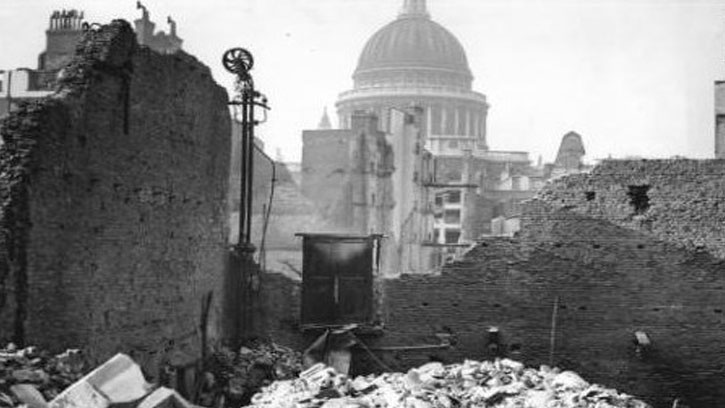
Lindqvist has amassed a body of evidence in this enlightening history of bombing warfare, making use of a huge range of historical sources. He arranges them in a somewhat unique way, so that they can speak for themselves and, through the course of the book, Lindqvist allows the sheer weight of the evidence to draw his reader along the many possible paths through his book toward the one inevitable conclusion. Lindqvist examines bombing as military strategy, considers its cultural context and, most powerfully, takes on the oft-touted concept of ‘Precision bombing’. Some readers might find it interesting to also know that Lindqvist was himself bombed as a child. This doesn’t so much skew the writer’s arguments as, from time to time, lend him a unique perspective on them.
By the end of Lindqvist’s book we are left with the realisation that the term ‘Precision bombing’ has been so misused as to be virtually redundant, little more than the PR-speak governments over three generations have used to forestall objection to bombing campaigns conducted, in effect, against civilian populations: ‘precision bombing’ has been the catch-all moral and political get-out clause. Lindqvist traces so-called ‘Precision bombing’ campaigns throughout human history and it quickly becomes clear that from the deliberate WW2 strategy of area bombing in key german towns to the ‘shock and awe’ tactics in Iraq, ‘precision bombing’ has more often than not turned out to be straightforward area bombing, intended to crudely terrorise and cow the general population, rather than anything else.
Further to that last point, in terms of the long term effectiveness of bombing as a military strategy, Lindqvist makes a good case for bombing being premised on two fundamentally faulty beliefs:
1. That human beings will be cowed and supplicant to the bombers, rather than united in common cause against them;
2. That bombs can and will differentiate, except in extreme instances, between the target and the innocent. Lindqvist’s evidence is: they won’t. Bombs are by very definition a crude tool. Even with the most modern technology, the ‘target’ and the innocents are living side by side, harm done to innocents is an intractable and inevitable part of bombing which no talk of ‘Precision’ can erase. ‘Collateral damage’ is the military term for the women, children, infants and other innocents, young and old, who are killed, maimed, crushed, burned or buried under the rubble. ‘Collateral damage’ makes the child amputees in the nearby hospital sound secondary to the main point. Makes all that damage seem containable, clinical, emotionally safe information for military personnel and the public to handle.
Lindqvist considers the cultural milieu of bombing: often noting how bombs and bombing, by all and any sides, are tied up irrevocably with notions of manliness. He traces the ways in which this supposed interconnection between bombing and manhood is much ramped up in much of the story, film, propaganda and public debate predating the most brutal bombing campaigns; Lindqvist also traces racism as having a direct relationship with bombing (the unconscious or consciously expressed idea that ‘they’, i.e. the bombing victims, are ‘not like us’, different, making it possible to detach ones familiar moral judgments and act more inhumanely toward them, or enabling a dangerous tribalism which allows a military operation to prioritise the lives of ‘our’ servicemen over those of even children from the opposing side, so long as they live in remote areas and there are no cameras present); Last of all, and perhaps most terrifyingly, his evidence shows that in the run up to bombing campaigns there are idealised notions about what technology may deliver. In the popular novels and stories predating Hiroshima, for instance, the bomb takes on semi-magical properties in the narrative. It can make all bad things go away in one cool, clean stroke. An infantile idea, of course, when put forward so straightforwardly, but a much more powerful and insidious one when imbedded as a message in a hundred different art forms to which the public are exposed in the years preceding a brutal bombing campaign against a civilian population. To give you a real shudder, Lindqvist effectively demonstrates that all three elements: machismo, racism and ‘magical thinking’ were present in popular novels about bombs and bombing in the period leading up to the bombing of Hiroshima.
The last piece of the puzzle is perhaps most relevant to the empathy library: the inescapable fact that a bomb kills from a distance. There is no human eye appraising a complex and moving situation, no interaction: even today there are only shadows on a screen, very much like a video game, in fact, of the kind now often used to recruit and to train armed personnel. Empathy and compassion, humanity are of course entirely absent from this detached place.
Many people, including relatives of serving men and women, may object to Lindqvist’s evidence about the atrocity of much of aerial warfare, its effect on civilian populations, and I sympathise. My own maternal grandfather took part, as a WW2 Lancaster bomber, in some of the most heartlessly destructive bombing campaigns in human history (and no, it wasn’t ‘Just the Americans’, as many Britons tell themselves). There was no ‘gotcha’, for him, I have to say. No ‘shock and awe’ or other macho posturing. Only a man who had to live out the rest of his years knowing that he’d been responsible, in following direct orders, for the deaths of women, children and infants. (He’d perhaps also saved the lives of other women, children, infants, but they were hypothetical for him, where the civilians he had killed were just all too real.) I personally believe he comprehended his predicament entirely and was destroyed by it. And of course it doesn’t detract from the pain of the victims one iota to consider what is being asked of the (often young) men and women who serve to protect us. But whatever the bomber feels or doesn’t feel must of course pale into insignificance when set alongside the plight of those being bombed. Lindqvist makes the point that even those not directly hit or physically hurt undergo the psychological harm of knowing that the sky/roof can fall in at any moment. One can’t help but wonder at the naive brand of psychology that imagines that generating this kind of climate of fear does any good to any side in the long term. Imagine, for a moment being a child raised in such a highly strung environment, of course some children might be cowed and supplicant, and decide that when they grow up they will go the bombers way, but as Lindqvist effectively demonstrates, the evidence from much of human history suggests the other outcome entirely. That the bombed population will become desperate, extremist, united in a profound resistance against the bomber and all that he stands for. The bomber makes enemies that he didn’t have before. Damaged and dedicated enemies. Setting aside, for the sake of argument, the question of compassion for the fearful child in the situation (and why would you ever set that aside?) there is still enlightened self interest for your own child. Lindqvist brings the question home, as an aid to understanding: Did bombing attacks on Britain make the British supplicant? Were the British bombed into submission? The question beggars belief, because of course history teaches that the exact opposite occurred: a deeply class-riven and divided people were united in common cause in a historically unique and profound way. Their common goal to resist their enemy together trumped all and anything else. Bombing Britain thoroughly secured Britain’s unerring sense of togetherness, fellowship, purpose. Considering how our own society has felt and reacted should make it easier to understand why drone attacks might easily miss their intended target in more than one way.
The cold fact seems to be that the trajectory of modern warfare and technological development is such that wars may be increasingly waged at the flick of a button from a very great distance, and as a society it has never been more important for us to take stock, consider what it means when a button can be pushed, at no cost to themselves, by a man or woman sitting in a comfortable chair at a very great distance, having the power of life and death over people on the ground. Through their ‘video game screens’ they can’t look into their target’s eyes, see that he is ready to surrender, terrified, that he’s the wrong guy, or just a child hiding under a table. We need to face this squarely and grasp it, consider what exactly it is that we are prepared to live with. Lindqvist might argue that this isn’t even the real question. That bombs aren’t effective as a long term military strategy at all.
It is perhaps Lindqvist’s greatest accomplishment as a historian that he has taken apart, piece by evidential piece, the moral and political get out clause of ‘precision’ bombing and exposed it for the myth that it is. Also tracing the infantile idea, imbedded in some sections of our culture, that there can be clean and instant solutions to complex human problems in most instances. There may be exceptions that prove the rule, of course, but as an overall strategy, with each new ‘collateral damage’, each innocent killed, there are tens and hundreds of new recruits to the opposite side, a thousand newly-made enemies for the bomber, and a moral war being dangerously lost a little more each day.
Someone told me to work ‘market positioning’ into the pitch for my novel. I said “What do you mean?” And he said, “Oh, you know … This novel is ‘him-who’ meets ‘so-and-so’. All that.”
So that got me thinking.
Imagine ringing Cormac McCarthy, whilst elbowing Arthur C Clarke gently in the stomach. Clarke groans and McCarthy, it turns out, won’t take your call. Meantime (because you’re multi-tasking, you understand) you’re buying Jean Rhys a G&T and Harper Lee an orange juice, Swift a pint. Which he gazes at in disgust, before swooping out abruptly. The two women stare morosely at their drinks, do not touch them. Well, at least Harper Lee doesn’t (Jean Rhys doesn’t fuss much who’s buying – but then again, isn’t that why you like her?). Now you find yourself eyeing up Elmore Leonard, you can’t help it, his lines are so short and sexy, abrupt about turns and piercing eye-to-eye gazes. You try spinning on your barstool, you pretend you don’t see him. He leaves, or he seems to. Just now you are too upset to notice that much. You lean down hard on the bar, and you cover your eyes: Yes, it’s your ex, right there in the corner. Looking at you with a soft disappointed gaze. You realise that you’ll never get over that bastard, Faulkner. Never. That he’s ruined you. And furthermore, you are doomed, at least in Faulkner’s eyes. Maybe he’ll remember you fondly some day, but honestly that’s about it for now. It’s over between you. His sentences were really always far too long for any woman to reasonably handle. You often had to read and re-read him, just to figure out what was even happening some nights. You down the whiskey Elmore Leonard softly places at your left elbow. “It will be alright.” Elmore says. “You are going to be strong.” His voice is warm and satisfying and you remember how well he always treats women, even though Emily and Charlotte keep trying to warn you against him. “It’s fine”, you tell them. “He might kill me but he won’t patronise me. It’s not nothing, that.” The Bronte girls softly shake their heads and sigh and murmur in a nineteenth century way (you can’t hear what they’re saying, because the bar’s loud). You gather your thoughts. You try to gather your thoughts, but the room softly blurs. There is a terrible searing feeling in your throat. You realise, too late, Leonard’s poisoned your whiskey.
You know, deep down, that Elmore Leonard only wants to kill you in another one of his improbable plot-lines. And is just figuring out the why and how of your death as you take another deep swig of his dark noir-ish whiskey. All the while William Faulkner and Jean Rhys are slipping quietly and discretely, arm in arm, out of the room. It hurts but you know they are right for each other. It’s possible that Jean turns in the doorway, grins at you, thanks you for the drink (and you always did like her). But then again the whole room is blurry, remember? Who can be sure whom Jean’s really thanking. You summon yourself. Raising yourself up to your full height (that screw under the barstool really helps). You glare at their retreating backs: “Blurry is fine.” You say. “Blurry is what I was going for. Actually.” You stop talking. You realise you have gone too far again. “I have something important to tell you all …” You try. But the room is empty. There is only Elmore, slipping into the seat beside you. Murderous intent just written all over him (and you can Tell not Show, I mean, Crikey, who doesn’t know what murderous intent looks like? It’s not like his eyes would flash, or his jaw lock, or a seam of sweat twist, glinting, down his temple. No, course not, that would all just be … Weird. And we know Elmore’s brand of murderous look would be impossibly subtle. And that no-one says Crikey. Not these days. You begin a solemn slow-slide off your barstool, thinking about what subtle murderousness might look like and why no-one ever says Crikey. All that. When it’s such a great word. “Jane.” Elmore says, interrupting your reverie. Did I mention that his voice is warm and satisfying?
“Jane. There are too many words in this pitch. Jane, it’s self indulgent. You are losing the gig now, everyone stopped reading it sixty lines back, if they even clicked on the link, and this all needs an edit now anyway. Possibly a delete.”
Elmore seems to have it all figured out and after all, you like that in an author. You remember that he never talks to women except intently, you decide that’s fine because to meet your poetic standards whatever it is that he’s doing on the barstool next to you, it must end in ‘ly’ and no-one should be realistically seduced, let’s face it. Or at least not in our time. Not slyly or tuberously either. If that’s even a word. You take another swig, you try to meet Elmore’s long gaze. It comes to you that your name is not Jane. It’s a sudden understanding, that is. Right here by the window. You realise you don’t have a market position or a proper genre even and that you never will have one. Sun-light filters in, lights up a dust mote. It’s alright, you think, “There are no palm trees. And I’m almost sure I’m essential to Elmore’s plot.”
“That’s your pitch? You’ve got to be kidding. I mean … No Woman was ever essential to
Elmore’s plot. Sheesh. At least I don’t think so.”
“Hmmm. Please don’t say sheesh. But you might have a point. Okay, try this:
The new novel is Anne Holm after William Faulkner left her for a better writer, Elmore Leonard got her drunk on cheap whiskey, Jonathan Swift kicked her hard in the shin (or maybe the head) and Ursula Le Guin helped her slowly back on to her feet, hobbling and keening to the left a little. Jean Rhys may or may not have at some point in the story stopped by, picked up a drink and left, grinning or not grinning. It’s hard to say which. Only this writing is worse than that, obviously. Because that writing would be too awesome and we would be blinded instantly by the talent, unable to read on, concentrate on the words, anything. Because we’d be blinded. So this is definitely not that kind of writing. It’s not that genre. If there is a genre like that. And please don’t say ‘Sheesh’ again now. You are not a cowboy.”
“This is not a market position either. This isn’t anything. Look … ” Sighs. “No one can sell this. Any of it. I don’t even know what this is.”
“Oh. Okay. Well then definitely don’t read my new novel.”
“Why not?”
“It’ll depress you.”
“I’m not going to read it.”
“I’m posting the link.”
“Why would you do that? When I’m not going to read it?” Sighs. Holds head. “You are doing this All Wrong.”
“Okay, okay. I definitely won’t post it. It is definitely Not Coming Soon.”
“I’m not going to read it.”
“That’s good. Really.”

Two children begin a restrained friendship, conducted on the steps outside their block of flats and on long walks through their bleak, urban environment. Caps are often pulled down over faces and a great deal said without being spoken out loud.
The whole story hinges on the child-narrator’s apparently naive mistake in hearing ‘asylum seeker’ as ‘silence seeker’. This ‘mistake’ reveals how a child’s misunderstanding is so often not so much a lesser understanding as a new perspective on an old problem: the child-narrator has an empathic realisation that his Silence-Seeker friend, who has run from violence, war, trouble of many kinds, must now very much need quiet (along with peace, safety). There’s a wistful quality to the child-narrator’s voice here, a sense of a felt gap in understanding between the two friends: experience which just can’t be shared. This seems mature but the child-narrator’s voice somehow never feels less than realistic, his longing to make a connection with the other child is touchingly drawn.
There are many kinds of silence in ‘The Silence Seekers’: there’s the nuance in the pauses, the things left unsaid; there are the gaps in the narrator-child’s understanding; the palpable sense of the refugee child’s unwillingness or inability to name his troubles, and the silence of his resignation – no one will understand; lastly, the silence as our child-narrator listens so respectfully. Perfectly attuned to all that a silence seeker just can’t say. There’s a quality of stillness to this story that becomes gently haunting. And the book has a subtlety which lets it speak to adults as well as to children (the twist-in-the-tale on the last page makes you softly catch your breath). A book that feels essential, every school library ought to have a few well-thumbed copies, I reckon.
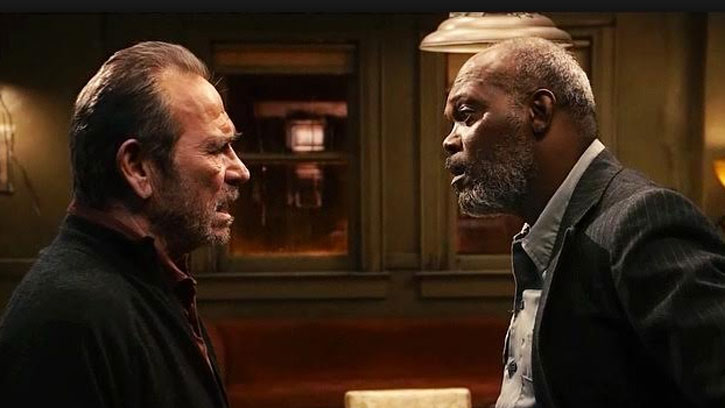
Cormac McCarthy’s playscript-novella opens with a scene at a train station. A troubled man, White, leaps suicidally from his platform only to land on another troubled man, Black (in spite of the writer’s deliberately crude naming strategy, the piece has much less to say about the two men’s racial difference than it does about their relative privilege and poverty, and it may also be a quietly wry sign from the author about the dangers of ‘Thinking in black and white’). McCarthy also allows himself to play with the idea of the fallen angel and the Good Samaritan: Black, picking himself and White up off the concrete, jokes that White has fallen clean out of the sky. Being positioned to catch a falling man strikes Black as a sign from God and we don’t ask ourselves yet exactly what Black himself was really doing on the platform’s edge. Instead it seems clear at this auspicious start that White is the person in need and Black the very person with the emotional resources to help him. McCarthy will not be content with such psychological neatness, of course.
Most of the action takes place in Black’s bare New York apartment, in what are increasingly claustrophobic scenes. McCarthy doesn’t seem to want to delve too deeply into White’s back story, or whatever complex roots there may have been to his decision to jump, we only see his life in the broadest brush strokes and the most painful thing Black’s sensitive but probing questions can uncover is the sense of disconnectedness or alienation, at the heart of White’s otherwise successful life. Here’s where Black believes that he has the answer and he begins his own confessional-inspirational tale, with a broadly Christian message (although the essence of it, hope, a purposeful life, etc. could as easily be found in Buddhism, Sikhism, Judaism, in fact any of the six major religions). Predictably, White rejects all of Black’s arguments, but the usual religious-atheist circular conversation takes on the tenor of a struggle for life here, with White’s suicide being the spectre in the room.
Spoiler alert:
It is only when White gets up and strides out the door, perhaps walking back toward his death and the argument appears to be finished with a terrible and bleak finality, that the writer neatly turns the tables on us. We now see that our Good Samaritan, Black, is coming apart. Unable to help the other man, he’s now bereft of the hope which had enabled him to take on his own troubles, deal with his own traumatic past. He appears to finally break under the sheer weight of his life. The existence or otherwise of God, at this precise moment seems to be beside the point, but we feel every atom of McCarthy’s sensitive rage as Black gently crumbles in his own doorway: to think that White came to this room blindly for help. Never once seeing that he was supposed to be it. McCarthy tempts us to wonder which of the two men really sustained the fatal damage when White leapt.

I’m going to go out on a limb here and say that I think the children’s picture book is the most underrated art form. ‘Willy and Hugh‘, is a fantastic story about the possibilities of friendship between radically different people and a neat way in to talking to children about prejudice too. You can ask softly leading questions as you read alongside, ‘What does Hugh like? What is Willy afraid of? Are they the same? How do they help each other?’ The story can be used as an emotional teaching tool to gently guide children toward understanding that the differences between the two characters don’t threaten their friendship, in fact they underpin it – Hugh is gentle but strong and Willy’s bullies back off when Hugh stands, revealing his huge frame. Willy, with nerves of steel, rescues Hugh from a tiny spider terrifying him. There’s a lovely twist on the last page when the two arrive wearing identical tank tops – Hugh’s is fraying, his huge arms strain at the seams of it but Willy wears his with a smart shirt and tie. When faced with their vest-matchy dilemma, Willy and Hugh put their arms out toward each other for a wry but very warm hug – soul mates!
‘Dogger‘, is the classic tale of a small boy, Dave, and his lost toy, Dogger. Like all Shirley Hughes books, this is packed on every page with emotional nuance, infused with Hughes’ humorous and compassionate viewpoint. Small children seem to relate quite strongly to Dave’s longing for his lost toy. Adults can sympathise with the mother, turning the house upside down to find the durned thing. But for me the real heroine of the tale is Bella: a wise and wry little girl of around eight who, in a brilliant flourish of generosity and sacrifice, caring and playground diplomacy, manages to save the day.
A story about dictatorship, in this case one which occurs within the family, and a young boy so entirely in the power of his father that he cannot speak the truth. The child’s struggle is partially understood by one or two others outside of his family, including a wise and compassionate local judge who, by example, helps the boy to make a psychological break with his terrifying parent.
Spoiler alert:
When the child finally speaks up, it is to save others from his father, and this crucial moment involves the boy literally fleeing for his life. He has also quite possibly caused his father’s death, indirectly at least.
Faulkner, with his genius for understanding what it is to be human, gently teases out the boy’s conflicted love for his father. It is Faulkner’s accomplishment that we are running alongside the boy as he flees, shivering with him in the cold when he hides. Even turning with him toward his incorrigible father, seeing that man for the last time. Faulkner never tells us it will be easy, even at the end. We must feel the child’s grief as much as we can feel that he’s free now.


Jean Rhys
Spoiler alert throughout:
Rhys retells the classic Jane Eyre, from the point of view of ‘the madwoman in the attic’, the first wife of our hero Rochester. He will not be such a hero to us by the end of the tale.
Rhys shows us how, piece by careful piece, ‘our hero’ completely disempowers his first wife, using every single method which his culture permits him to use: he removes her economic independence (her inheritance is signed over to her husband), he dismisses the Caribbean culture in which she was partially raised and which is her solace, he endangers and ruins the only mother figure in her life, her black nurse. He changes her name. Her black nurse calls this last the darkest sort of voodoo, identity theft. As an ex-slave, she knows of which she speaks. Rhys is careful to show us that, within the mores of his own society, this man’s behaviour is never anything less than ‘respectable’. Rhys invites us to see him otherwise and at the time in which she wrote the novel (although not so much, perhaps, by the time, a good twenty years later, when it was finally published) Rhys’ story was radical, and quite undermining to the dominant culture’s view of itself. Rhys brings a sympathetic understanding to the farthest reaches of the attic in The Great House and it’s her greatest accomplishment that by the end of the story we are with ‘the madwoman in the attic’. Stalking the corridors and setting the curtains alight.